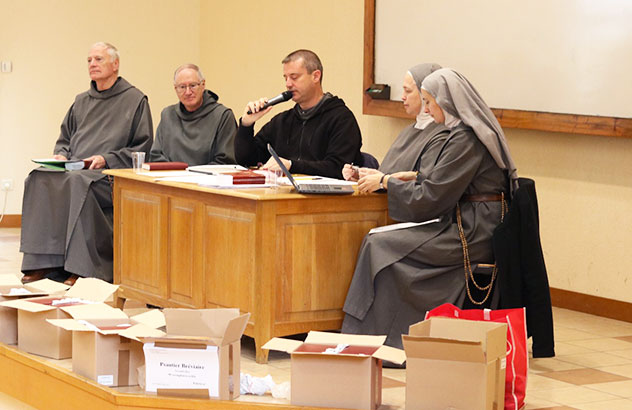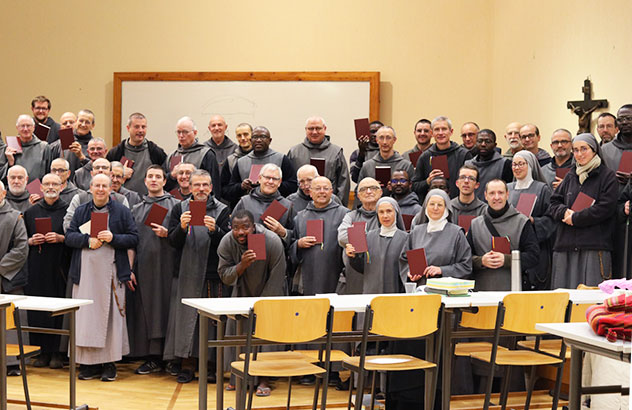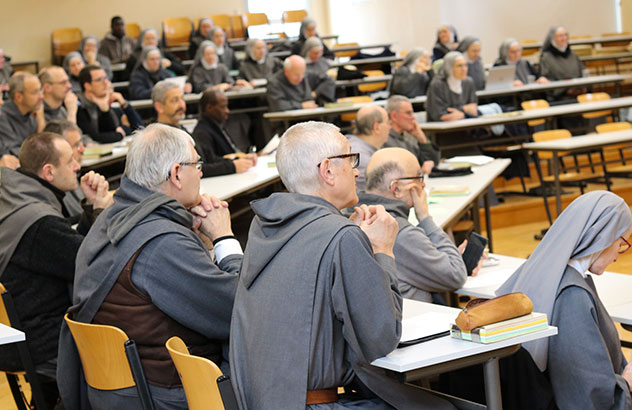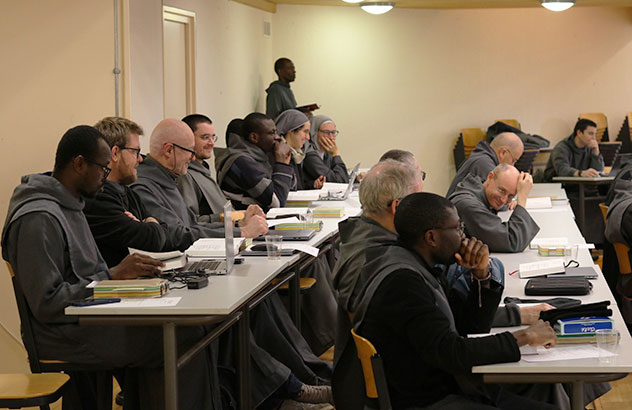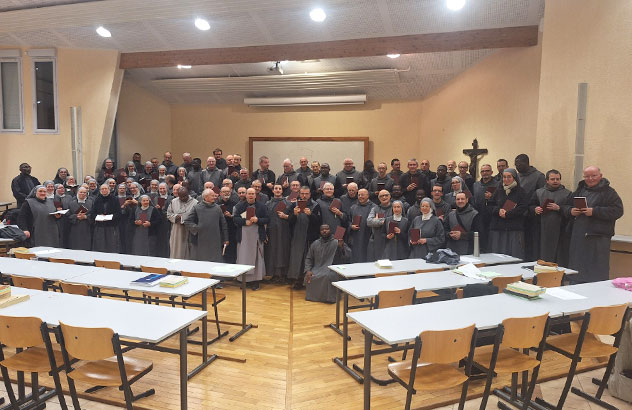
After several years of work, experimentation and proofreading, the new French-language psalter of the Family of Saint John is now available. Its completion marks an important step in the development of the Family of Saint John’s liturgy. It roots our prayer more deeply in the Liturgy of the Hours of the Church, while keeping alive the spiritual and musical heritage received over the years.
This change concerns a large part of the Family of Saint John: French-speaking communities make up about two-thirds of the priories.
A work begun in 2019
The reform of the Liturgy of the Hours began after the 2019 General Chapter. A Liturgical Chant Commission first carried out a three-year review before making several recommendations.
After the 2022 General Chapter, the French-language Commission for the Reform of the Liturgy (CORELI) continued this work together with the sisters.
Three main guidelines shaped the reform:
– closer conformity with the Liturgy of the Hours of the Church;
– use of the official translation of the psalms;
– respect for all parts of the Office.
In addition, special attention was given to the French language and its rhythm, so that the psalmody would flow naturally and prayerfully, while keeping the riches of the Family of Saint John’s own tradition.
A reform introduced step by step
The work took place in several stages.
In 2023, a first change concerned the hymns, the responsories and the distribution of the psalms, which now follows that of the Liturgy of the Hours.
In 2024, the opening dialogue of the Office, the invitatories and the three Gospel canticles were introduced in turn.
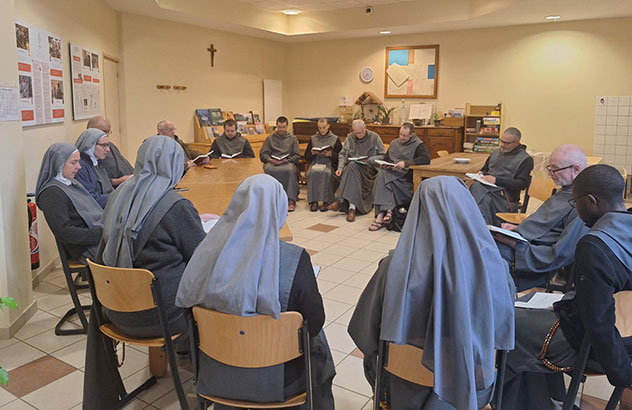
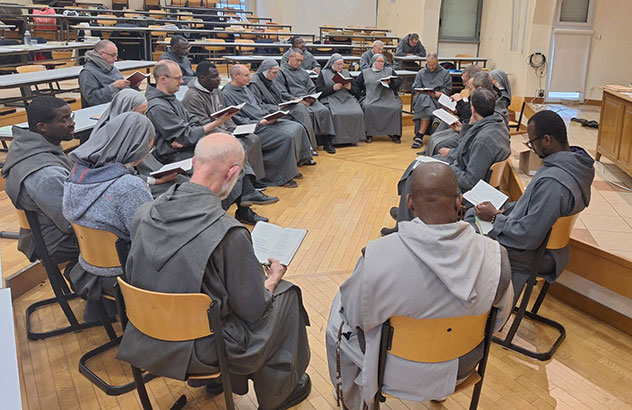
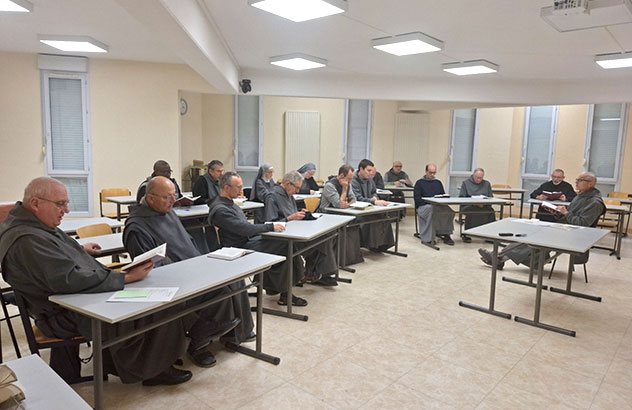
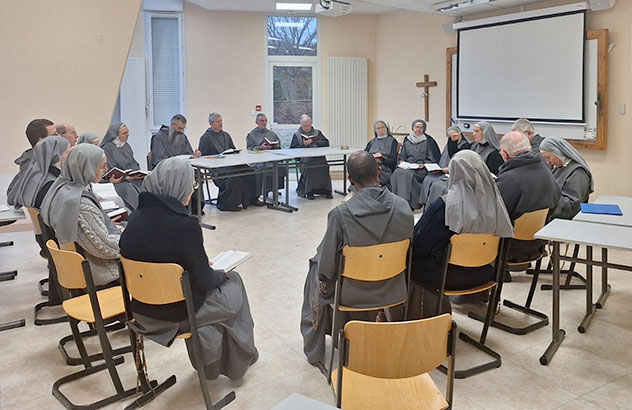
In 2025 and 2026, the new psalter was tried out in eight priories, four of brothers and four of sisters. This full-scale trial made it possible to find and correct several hundred errors before publication.
What is changing?
Overall, the new psalter keeps the structure the brothers and sisters are used to, but it adopts the texts and the distribution of the psalms of the Liturgy of the Hours.
The psalmody keeps its Gregorian inspiration, with simplified tones. Only one ending is now sung per section, with no alternation between the cantor and the choir.
New antiphons, composed by Philippe Robert on the texts of the Liturgy of the Hours, are gradually being added to the existing repertoire.
Particular attention is also given to the musical phrasing of the verses and to the silence between verses, so that the music remains fully at the service of prayer and of the text.
The psalter also brings together the responsories of the Liturgy of the Hours, updates the prayers for the feasts of the saints, and includes the new translation of the concluding formulas of the prayers.
Finally, several customs specific to the Family of Saint John have been kept, sometimes in a simplified form, including the Cenacle.
Prayer more closely linked to the Liturgy of the Hours
Because it uses the official texts and the distribution of the psalms of the Liturgy of the Hours, the new psalter also makes it possible to follow the Office with the Prière du Temps Présent, the volumes of the Liturgy of the Hours, or the AELF apps, the official French liturgical texts association ».
It is not sold commercially and is intended for the liturgical use of the Family of Saint John.
A publication that will keep developing
This new psalter is an important step, but the work is not quite finished. Some antiphons still need to be completed, especially for Advent, Christmas, Lent and the feasts of the saints. The psalter will therefore be enriched gradually.
This reform is about more than a new book or new melodies. It touches something very much part of daily life for the brothers and sisters: the way they pray together several times a day. It seeks to hold together two essential dimensions: fully receiving the liturgy of the Church, and continuing to keep alive the spiritual and musical heritage of the Family of Saint John.
Although this new psalter is in French, its publication may also be of interest to brothers on other continents. Many speak French or have themselves prayed for several years with the French psalter and the Family of Saint John’s tradition of psalmody. This change is therefore part of a shared history, while respecting the work being done in each language.